BACK on
the BEACH

By Jenny Starr Perez

A WAVE OF NEW OPENINGS SIGNALS SOUTH BEACH’S RENEWED ENERGY. BUT WILL THE ICONIC DISTRICT REGAIN ITS PLACE AS A CULINARY AND CULTURAL LEADER?

“Just be cool,” Maria whispered as we stepped past the velvet rope. She was my best friend’s older cousin—the kind of effortlessly cool girl who knew every bouncer and every theme night on the Beach. It was 1994, and we were heading into Cameo, the nightclub on 14th and Washington Avenue, where the line outside snaked down the block unless you had connections. That night was Disco Inferno, and once inside, my teenage brain lit up like a disco ball. Gloria Gaynor’s voice rang out—”I Will Survive”—and around me danced a kaleidoscope of characters: club kids in neon, drag queens in sky-high heels, and men in sleek GQ suits. At just 14, I knew I was seeing something special. To call it a club night is an understatement; it was a full-blown cultural awakening. And maybe it was the glitter in the air or the freedom on the dance floor, but that night cemented something I’ve carried with me ever since: an enduring love for this city and its unapologetic personality.

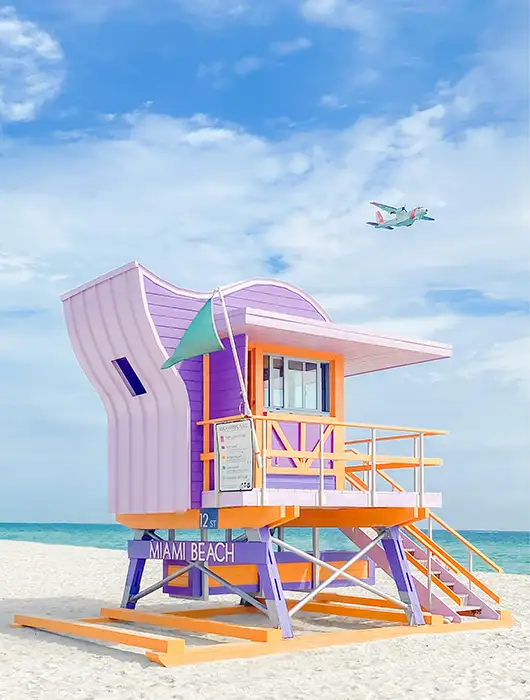
Do you remember when South Beach felt effortlessly glamorous? Growing up here, I witnessed the city’s evolution firsthand—from carefree days lounging on 8th Street Beach and watching performances by the Miami City Ballet on Lincoln Road, to seeing fashion icon Gianni Versace casually strolling along Ocean Drive. Yet, along with these cherished memories, I’ve also seen South Beach weather numerous challenges: rampant overdevelopment, the closure of beloved establishments like Van Dyke’s Café, and endless traffic congestion on Collins Avenue and Alton Road. For years, these challenges, coupled with disruptive spring break crowds that prompted stringent city ordinances—including restricted beach access, increased police presence, security checkpoints, and steep fines—made locals opt for evenings in trendier Wynwood or the upscale Design District.
Despite these past setbacks, my affection for South Beach and its distinctive Art Deco charm has remained unwavering. Recently, however, there’s been a noticeable shift as the area begins to reclaim its status as a cultural and culinary hotspot.Major Food Group’s Carbone, which opened in the South of Fifth neighborhood and quickly became a magnet for those craving a nostalgic yet elevated dining experience. Its success was followed by other more recent debuts, including Gordon Ramsay’s Lucky Cat and the arrival of beloved Chinese spot Mimi’s in the historic Firestone building. Just this year, acclaimed Chef Michael Solomonov opened his Israeli-inspired concept, Aviv, at the sleek 1 Hotel South Beach, which is located at another of the city’s storied properties.

The famed Ocean Drive strip itself is also getting a cultural refresh. Ocean Drive Arts is at the forefront of this movement, presenting free, family-friendly concerts and arts programming every Sunday afternoon on the Ocean Drive Promenade between 14th Street and 14th Place. Featuring live music, visual arts, literary events, and culinary activations, the Ocean Drive Promenade Music Series— produced by the Ocean Drive Improvement Association in partnership with the City of Miami Beach—is breathing new life into one of America’s most iconic boulevards.
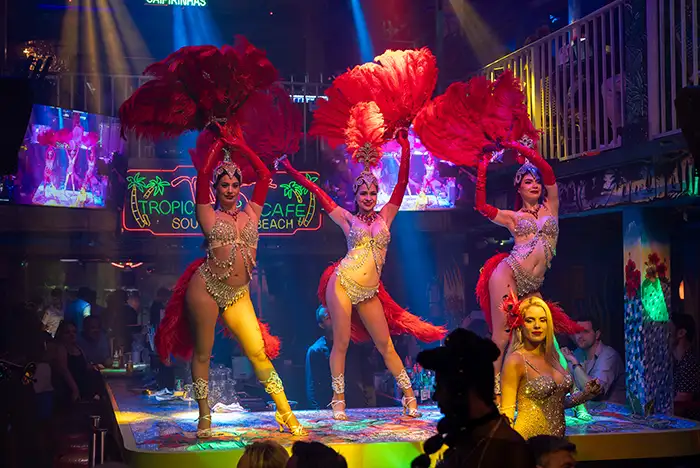
Central to Ocean Drive’s transformation is one of its longestrunning businesses: Mango’s Tropical Café. Under the leadership of CEO Joshua Wallack, Mango’s has redefined its place in the South Beach ecosystem. With the appointment of Chef Byron Rubio—formerly of Prime 112—the venue now offers refined dishes like Oysters Rockefeller and Poached Lobster Tail, complementing its iconic live performances. “People’s dining preferences have evolved significantly postpandemic,” Wallack notes. “Guests today seek elevated dining experiences alongside entertainment, and we’re delivering both.” The newly revamped VIP sections and stylish upgrades echo this shift, welcoming a younger generation looking for ambiance and quality in equal measure.

Lincoln Road is also seeing a creative resurgence. Already recognized as Miami Beach’s largest open-air sculpture park, it has hosted impressive large-scale works by artists like Marco Cochrane and Gillie and Marc. The Lincoln Road Business Improvement District continues to invest in the area’s artistic identity with a new open call for public art installations. “We’ve had the privilege of showcasing works by some of the world’s most celebrated artists, and we’re excited to welcome new talent to leave their mark on Lincoln Road,” said Lyle Stern, president of the Lincoln Road Business Improvement District.

“This is just the beginning – our vision includes even more immersive art experiences and cultural programming that will continue to engage and inspire visitors for years to come.” One artist will be awarded up to $75,000 to create and install a temporary public artwork that will be displayed on Lincoln Road through spring 2026. The chosen piece will receive high visibility across Lincoln Road Business Improvement District’s platforms, including its website, social media, and public relations efforts.

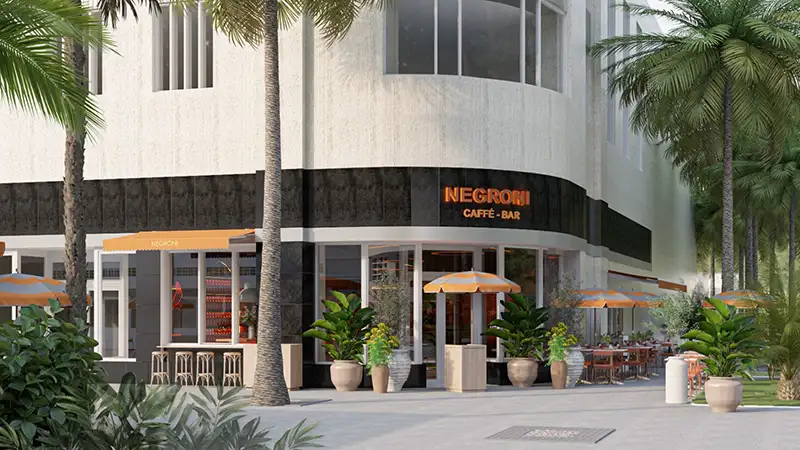
Culinary momentum on Lincoln Road matches its artistic growth. The Nice Guy by The h.wood Group, Noble 33’s forthcoming Mēdüzā Mediterranïa, and Golden Era Hospitality’s Oro are helping to redefine the neighborhood as a modern dining destination.

These openings are part of a larger wave of luxury reinvestment, with iconic hotels like the Delano and the Raleigh set to unveil new incarnations. Their reemergence signals that South Beach is not only back—but aiming even higher. Ultimately, the revitalization of South Beach represents a thoughtful blend of elevated dining and fresh cultural programming, complemented by significant hospitality investments, including the highly anticipated reopening of iconic properties such as the Delano hotel and the Raleigh, promising to enhance South Beach’s luxury hospitality scene. For those of us who never stopped loving it, this chapter feels especially sweet.