
A truffle hunt in Piedmont traces one of Italy’s most elusive ingredients from forest to table.

By late afternoon, the hunt shifts into Il Bosco dei Pensieri, an enclosed nature reserve in the Barolo Langa.
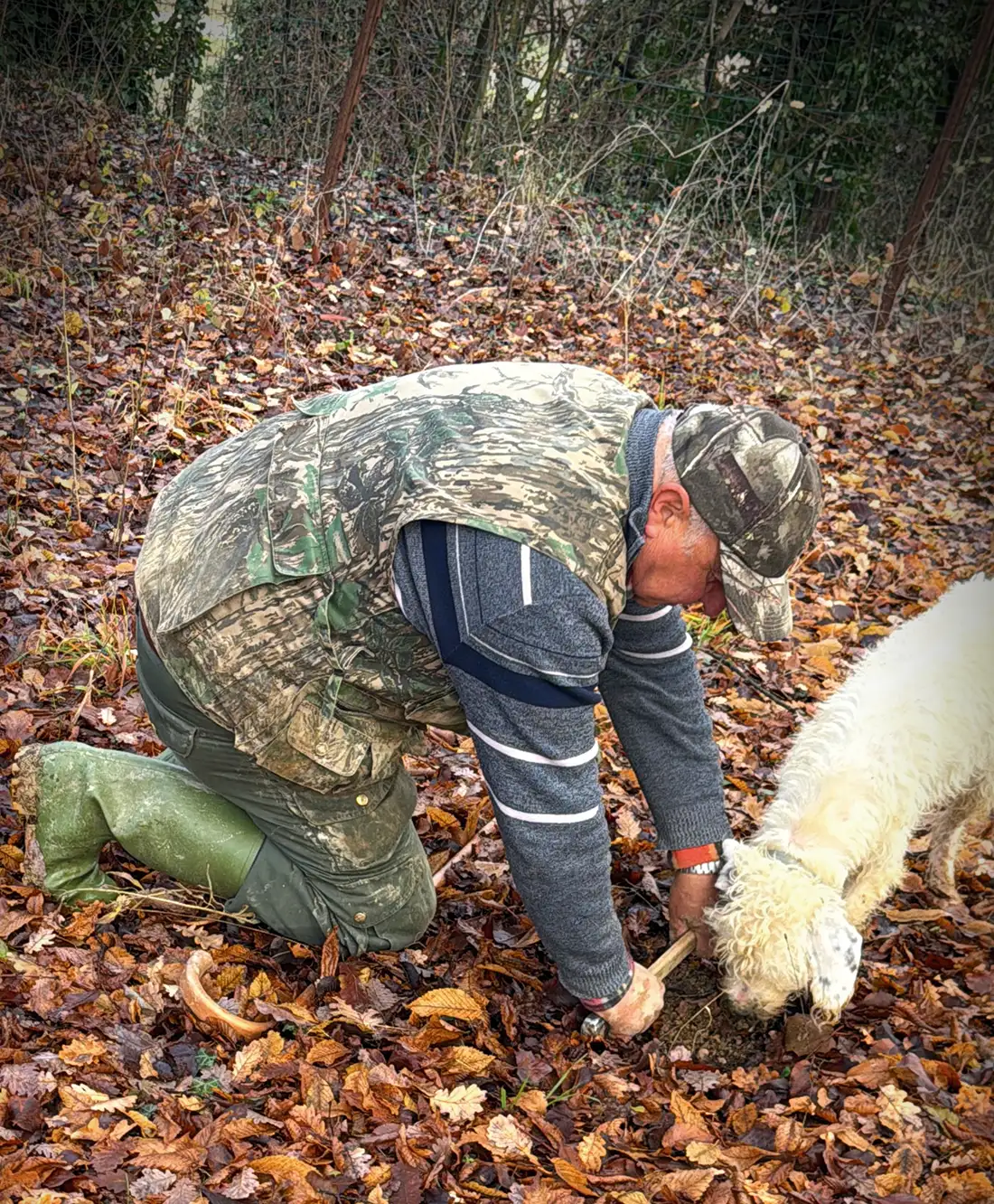
There, I meet Carlo and his seasoned dog, Gigi. Truffles, he begins to decipher, are sensitive to rainfall, temperature, and timing. “The chemical composition of the truffle is 80% water,” he said. “If we don’t have the right rain at the right moment of the season, everything changes.” He mentions that hunters speak of a “secret calendar” that truffles once followed, with certain forests producing in October, others in November, or others in December. But when autumn arrives late, or October runs warm, production suffers, that calendar is now harder to read.
Truffles depend on three elements to grow: the roots of specific trees, living spores beneath the soil, and limestone-rich earth that shapes aroma. “You can find a big truffle,” he asserts, “but without aroma, it is not good.” According to Carlo, growth happens underground over roughly 60 to 90 days. “We never know,” Carlo said. “Only the dog knows. This soil,” he details, pointing to the wet ground beneath our feet, “is what gives the smell.” Wildlife may eat them first, or other hunters may pass through unnoticed. “Maybe the biggest question is: how many truffles do we never find?”
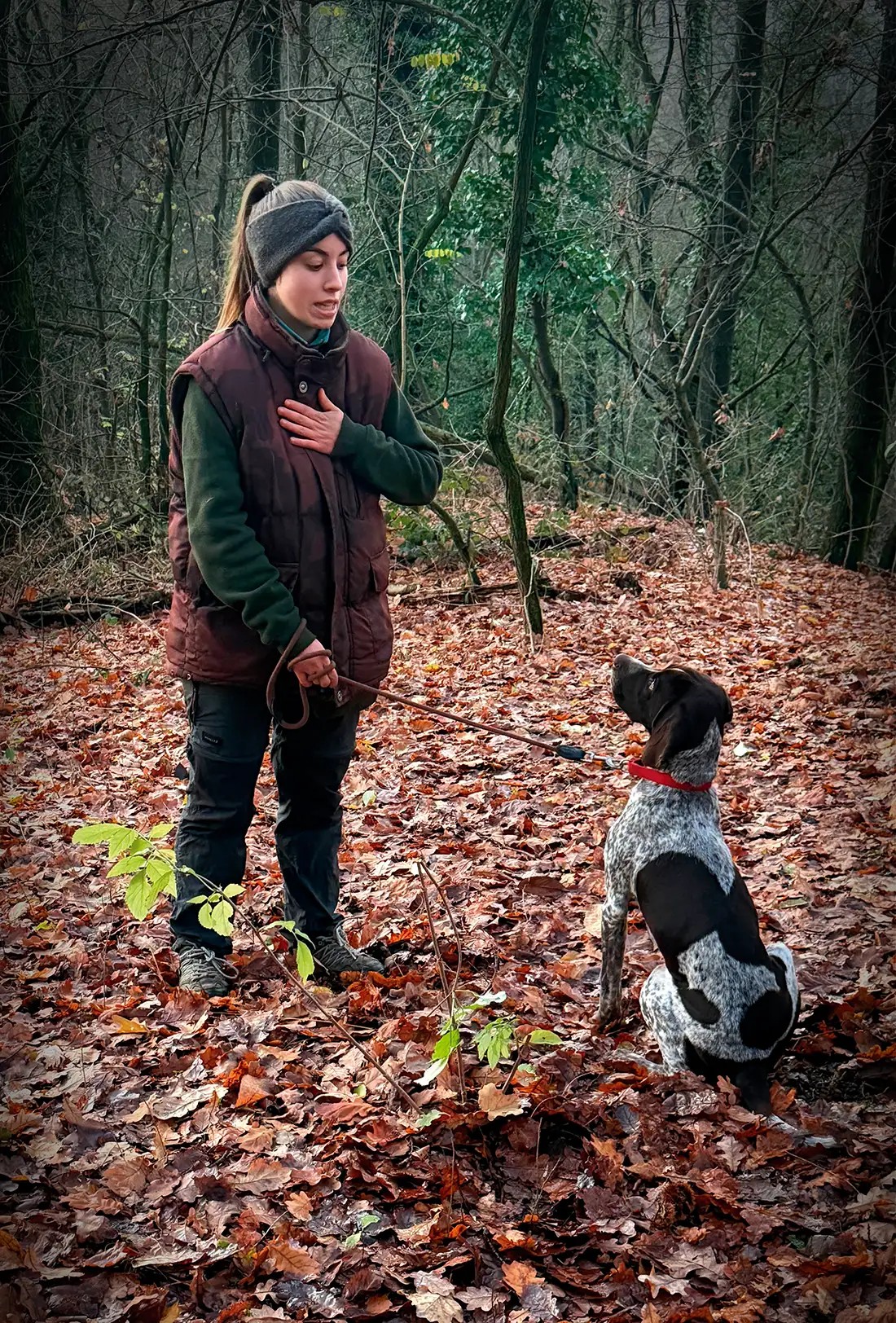
Every trifolau (the local Piedmontese term for a truffle hunter) I met first arrived the same way: cars caked in dried mud, boots, and jackets to match. The community of licensed hunters is aging, Carlo mentions, with few young people willing to take on a job that demands solitude, patience, and obsession rather than steady income. For those who remain, truffle hunting is a calling. One that requires listening to nature. “If you hunt truffles only for money, it is a big mistake. This is a passion. For three months, you forget everything. Even your family.”