
DELANO MIAMI BEACH RETURNS WITH ITS ARCHITECTURAL
SOUL INTACT AND A GLAMOROUS NEW VISION FOR
HOSPITALITY, CULTURE AND COMMUNITY.

I grew up in South Beach in the 1990s, when fashion shoots spilled onto sidewalks and the right hotel lobby could make an ordinary evening feel cinematic. Delano represented that very specific era of the city. It was chic, but also whimsical. Celebrities loved it, models drifted through it and its billowing white curtains seemed to lead guests to a glamorous universe waiting inside.
Never did I feel cooler than when I persuaded my friends to celebrate my birthday at Blue Door, the hotel’s restaurant, in 1997. We were still too young to order cocktails, but old enough to spend our money exactly as we wished. What we wanted was dinner at Miami’s hottest scene and the delicious possibility of being seen there. We dressed accordingly, walked into Delano, and felt as sophisticated as the Hollywood stars we hoped to catch a glimpse during the evening.
The hotel held that kind of power. Its white Art Deco tower had watched Miami Beach reinvent itself since opening in 1947, but its defining transformation came in 1995. Hotelier Ian Schrager led the relaunch, while Philippe Starck designed the interiors that would influence hospitality around the world. Guests entered through those famous curtains and encountered a fantasy populated by monumental furniture, fashion legends, celebrities, and beautiful strangers.
Everyone, it seemed, had a Delano story. Then, in 2020, the doors closed. After six years and an extensive renovation, one of Miami Beach’s defining hotels has returned. For those of us who remember its earlier chapters, walking through the doors again carries an added emotional charge. Delano has reentered a city that has changed dramatically in its absence, raising an intriguing question. How does a hotel so closely associated with one extraordinary era honor its mythology while creating new memories?
For Ben Pundole, chief brand officer for Delano Hotels, overseeing its revival carried a distinct sense of responsibility. He spent more than two decades working with Schrager and contributed to Delano during the early 2000s. “It’s personal,” Pundole says. “Delano played an enormous part in reshaping the cultural fabric of Miami and the hotel industry in the ’90s and moving forward.”
His guiding philosophy considers the hotel’s history while remaining focused on its future. “We have one eye on the past,” he says. “We’re very aware of what it meant to people, what it meant to Miami and what it meant to the industry, but we can’t simply hang our hat on that.”
The restoration, led by Elastic Architects, reached back to both Delano’s 1947 origins and its celebrated 1995 incarnation. Working closely with the Miami Beach Historic Preservation Board, the team restored the facade and logo while reintroducing terrazzo flooring, octagonal lobby columns, light wells and the mezzanine bridge that once crossed the lobby.
“Delano is a real architectural jewel,” Pundole says. “It’s worth protecting.”
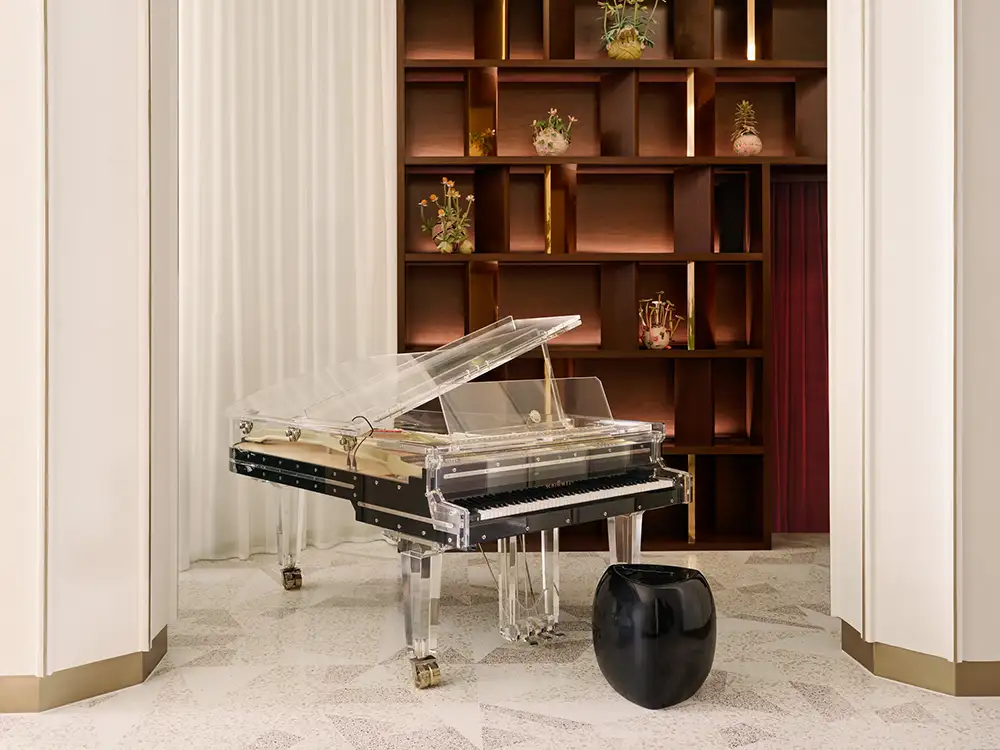
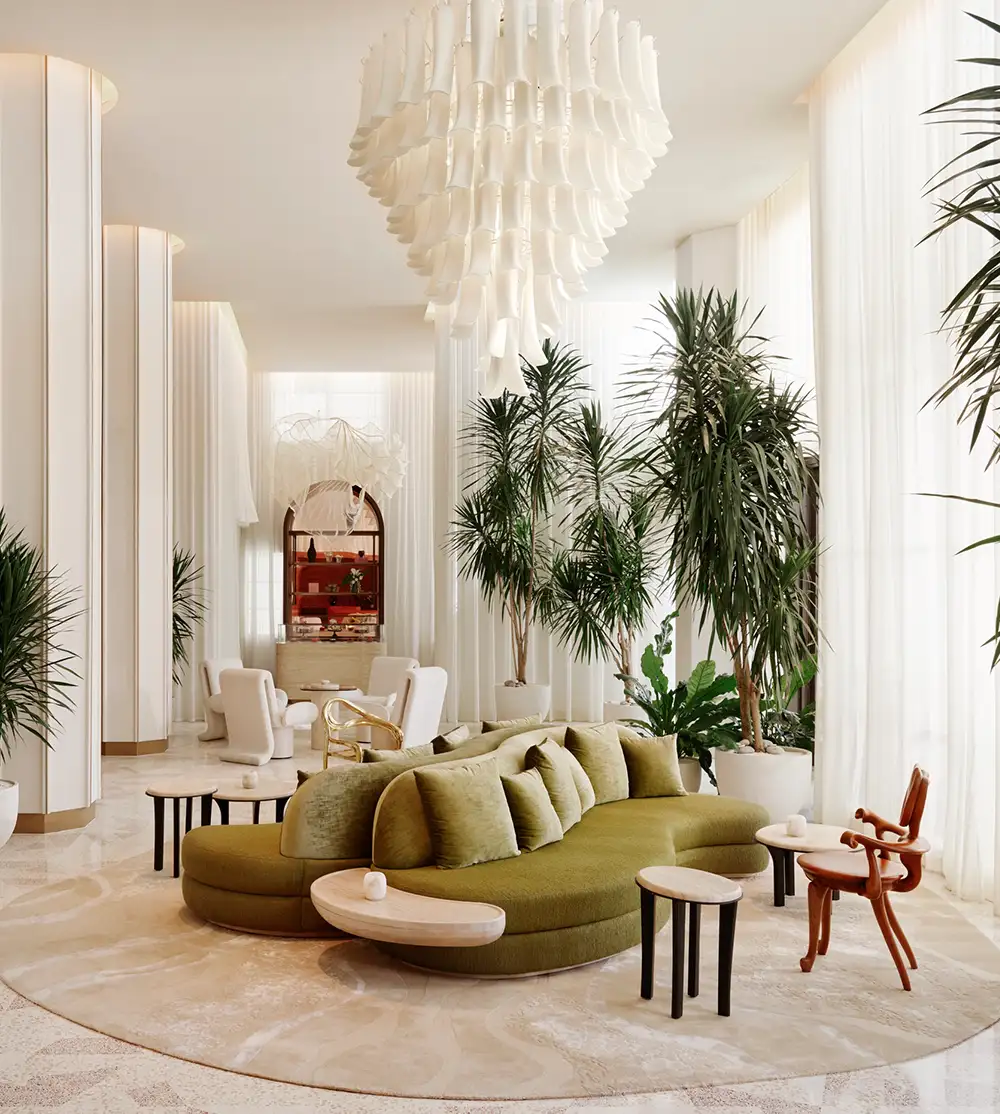
The hotel’s famous white curtains have returned in a reimagined form, accompanied by a carefully curated collection of distinctive design pieces. Salvador Dalí’s Leda chair offers a surreal conversation starter, while Antoni Gaudí’s Calvet chair and restored Murano glass Narciso chandeliers contribute additional layers of artistic interest. Lenny Kravitz’s transparent piano, first seen in the Florida Room, is once again waiting for an impromptu performance.
Preservation also required letting go of certain memories. The towering ficus hedge and mysterious blue door of the Starck era are gone, following city requirements that the facade remain visible from the street. The result feels open and inviting, allowing Delano’s restored exterior to resume its conversation with Collins Avenue.
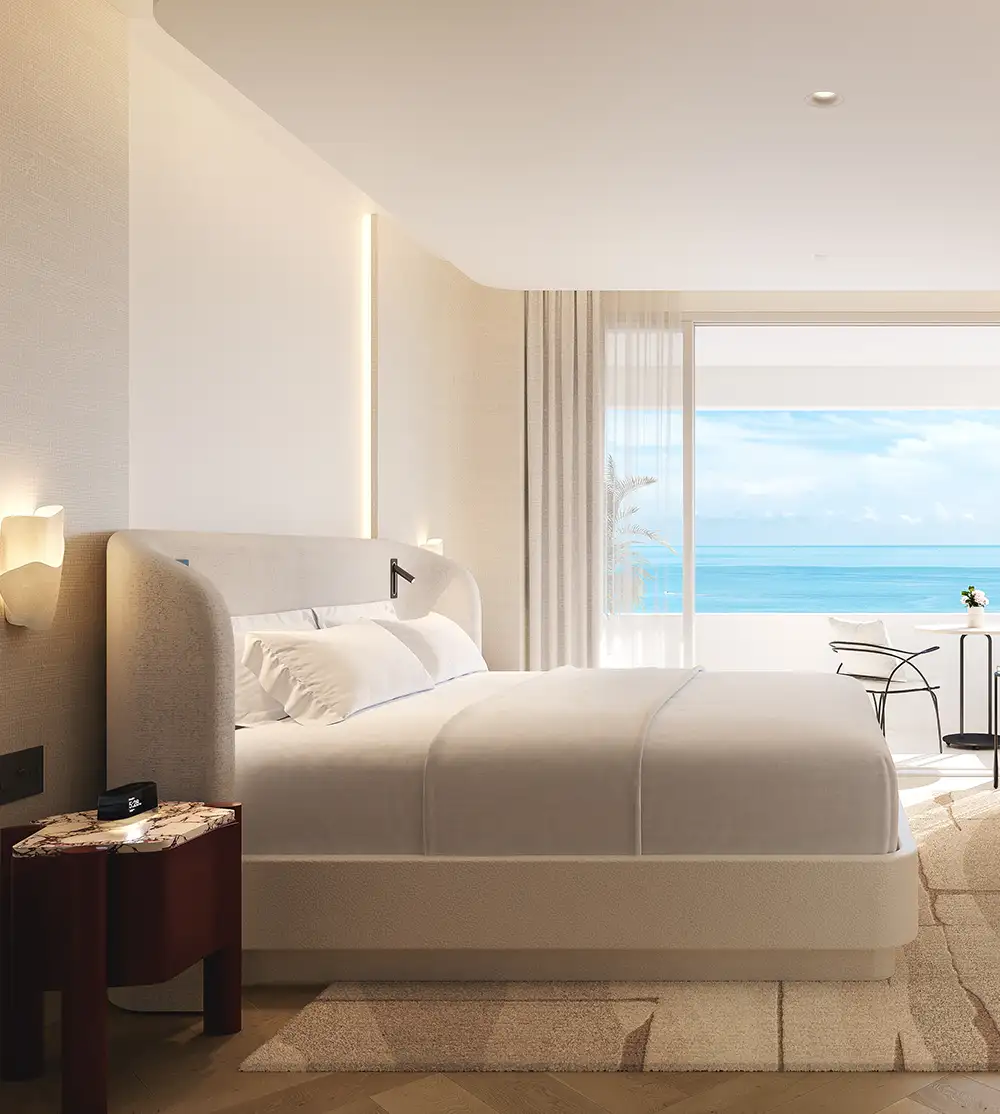
Inside, the 171 guest rooms and suites are filled with natural light, creamy neutral tones and curved architectural details. Two-story poolside bungalows feature living areas designed for entertaining, with more intimate accommodations upstairs. A pair of 14th-floor penthouses offers private terraces, kitchens and ample room for gatherings. Combined, the penthouses become a seven-bedroom, full-floor retreat.
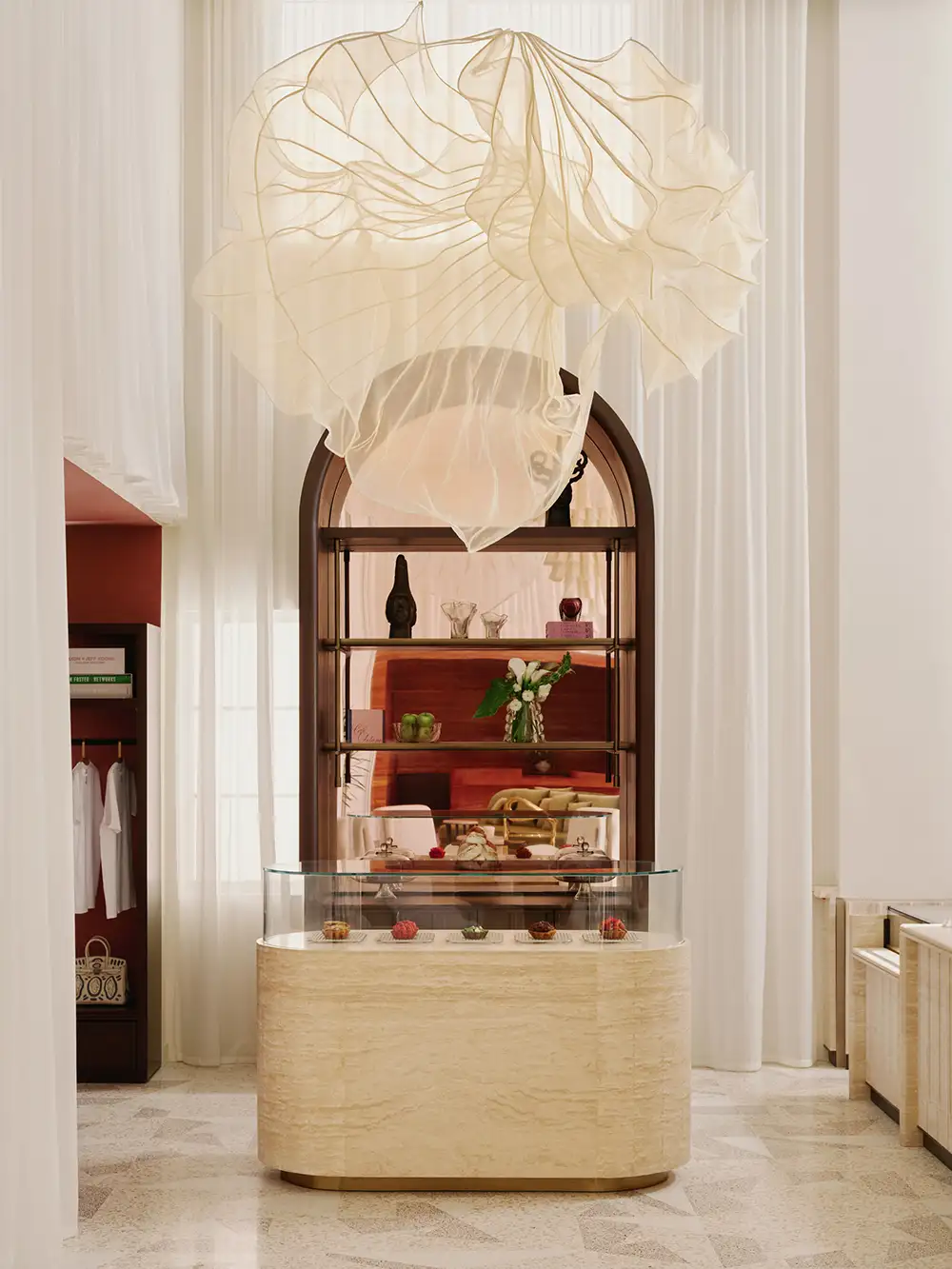
The lobby has also reclaimed its role as a social theater. Café Delano draws inspiration from Milanese cafes while carrying what Pundole calls “a lot of Miami soul.” Nothing Finer, the hotel’s retail concept, takes its name from Delano’s 1947 advertising slogan and carries everything from disposable cameras to silk scarves and limited-edition collaborations.
“We want people to feel that sense of transformation and a little bit of wonder when they walk into Delano,” Pundole says.
A new members club occupies the fourth floor, bringing together an initial group of culturally engaged local and international members. Its private pool, fitness studio, restaurant and calendar of talks, performances, gallery visits and culinary events extend Delano’s legacy as a gathering point. The Source by Delano, a 7,000-square-foot wellness facility scheduled to open this fall, will introduce treatments, movement experiences and a 22-person sauna designed for social wellness.
“The hotel used to be known for design, nightlife and celebrity,” Pundole says. “Times have changed a little bit.”
The former nightclub has given way to a wellness concept with plans for sound meditation, sunrise dance rituals and roller-skating outings. “We’re Delano, so we do want to have fun with it.”
Fun remains firmly on the menu. Delano marks the U.S. debut of Paris Society, whose restaurants Gigi Rigolatto and Mimi Kakushi arrive with highly developed personalities.
Gigi Rigolatto stretches from the first-floor dining room to the terrace, pool and beach. Designed by Hugo Toro and executed by Elastic Architects, the restaurant layers mineral plaster, carved wood, Sienna marble, coral stone and bohemian fringe. The Italian menu includes handmade pasta, grilled seafood, cotoletta alla parmigiana and a Bellini Bar near the beach.
Mimi Kakushi, available to hotel guests and club members, channels 1920s Osaka through Oriental Art Deco interiors, Japanese dishes and an acclaimed cocktail program inspired by silent-film actor Sessue Hayakawa. Café Delano handles relaxed daytime dining, while Rose Bar returns with eight coveted seats, dusky lighting, velvet upholstery and its restored Murano chandeliers. The bar itself dates to the original 1947 hotel and was named for Rose Schwartz, wife of the developer.
Yet the undisputed heart remains outdoors. “It’s the pool,” Pundole laughs. “I mean, come on! It’s the Delano pool!”
Fully restored, the long, theatrical pool now anchors Gigi’s indoor-outdoor experience. A new fourth-floor pool offers an additional retreat for hotel guests and members, but the original still holds the mythology.
Delano’s new art program roots that mythology firmly in Miami. Curated by artist and social historian Nicola Green, the collection brings established figures together with emerging talent connected to South Florida. Works by Edouard Duval-Carrié, Nina Surel, Marielle Plaisir, Natalie Galindo and others appear throughout the property.
“Delano is Miami,” Pundole says. “There was no way that we should do anything other than this because we want to support local artists and have them be part of our story moving forward.”
He also envisions partnerships with organizations such as Locust Projects and Fountainhead Residency, ensuring that Delano participates meaningfully in the city’s cultural life. “I care about it deeply,” he says.
That commitment may be the clearest sign that Delano understands its assignment. The hotel has returned to serve travelers, certainly, but also to engage the city that created its legend. Its guests, Pundole notes, are “experience experts” who have attended the fashion weeks, art fairs and design festivals of the world. They arrive expecting beauty. They remember how an evening made them feel.
Delano’s original magic came from making glamour appear effortless and allowing wildly different people to share in it. This new chapter has its own narrative, shaped by wellness, art, food and community. The white curtains are moving again. The pool is ready. Miami has another Delano story to tell.